
NSG Bamboo Center
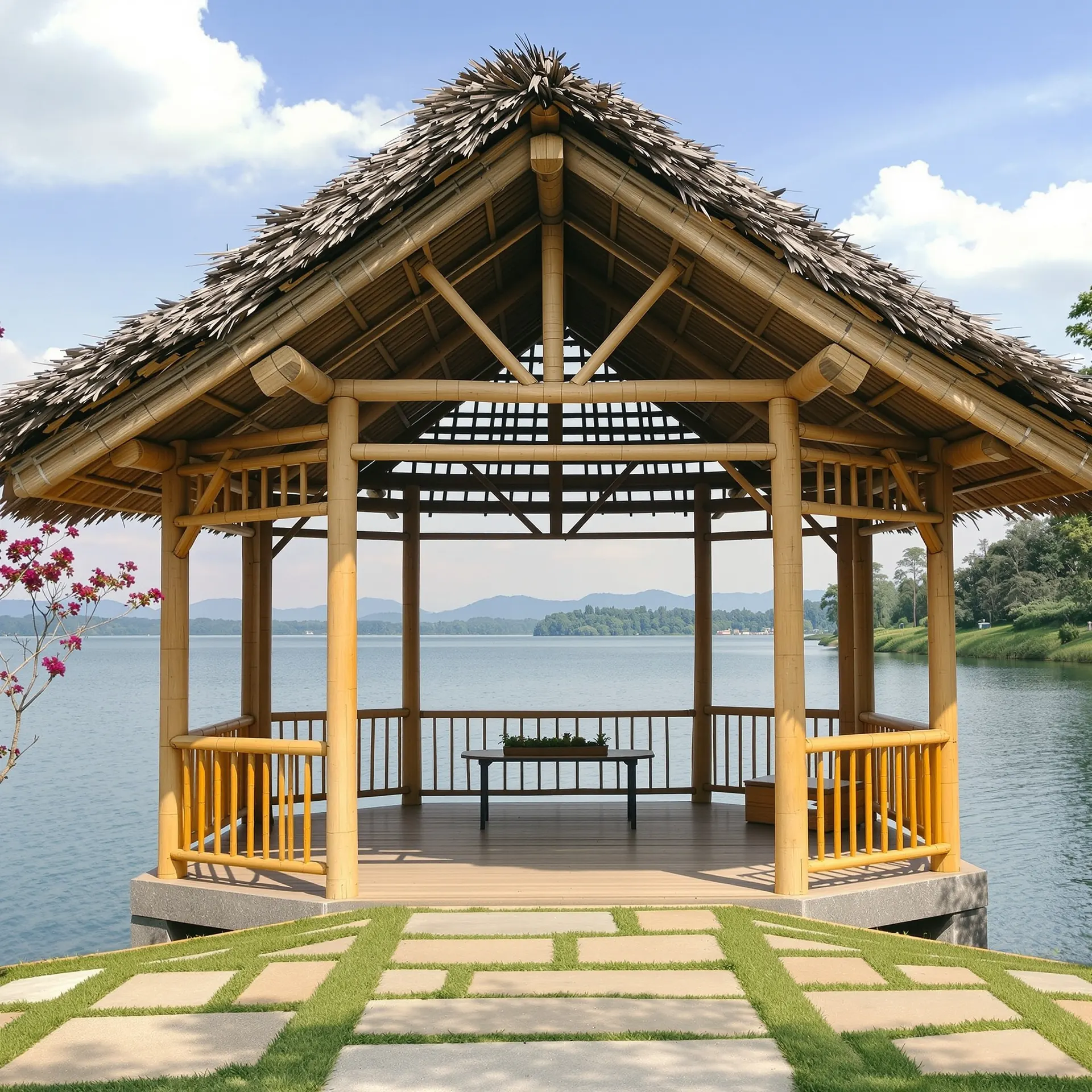
A bamboo gazebo (pavilion) is a garden structure built from bamboo posts and poles, open at the sides and covered with straw mat or thatch, creating shade, a resting spot and a dining area. Models fall into three basic types: pergola, gazebo (pavilion) and reed gazebo; the right choice depends on garden size, use and regional climate.
In short: For open, airy shade choose a bamboo pergola; for a fully sheltered corner choose a thatched gazebo or reed gazebo. Garden size, wind, sun direction and purpose decide. NSG Bamboo Center adapts the catalog models to your space during a free survey.
What is the difference between a gazebo, a pavilion and a pergola?
Gazebos and pavilions are usually freestanding garden structures with a covered top used for resting and dining; a pergola is typically an open structure with a top of spaced poles that shades a terrace or walkway. In everyday language the terms are often mixed up, so describing the structure you want with a photo or example helps.
- Pergola: Open, linear, airy. It filters sunlight and suits climbing plants.
- Gazebo (pavilion): A freestanding structure, often polygonal or round, with a covered roof.
- Reed gazebo: A gazebo with a thatched (reed) roof, more rustic and sheltered.
Which bamboo gazebo models are there?
The NSG Bamboo Center catalog contains several models for these needs. The table below gives a quick comparison:
| Model | Character | Suitable area |
|---|---|---|
| Tropical Bamboo Pergola | Open, tropical | Terrace, poolside |
| Pergola Bamboo Roof | Simple, linear | Garden, restaurant terrace |
| Gazebo Bamboo Roof | Covered roof | Garden corner, rest area |
| Rustic Reed Gazebo | Rustic, thatched | Villa garden, country house |
These models are not limited to fixed sizes; they are adapted to size, form and material. Requests without an exact catalog match are assessed during the survey under "custom design".
How do you choose a gazebo for your garden?
Four questions guide the choice: how large is the garden, what will the gazebo be used for, how are wind and rain in the region, and does the structure fit the garden's style? Based on the answers you can follow these steps:
- Measure the area: If there will be a table, seating group or kitchen corner under it, leave room to move around.
- Define the use: Dining, resting, kids' play or poolside use influence the type of structure.
- Watch sun and wind: A covered-roof model may suit sides that get afternoon sun; a pergola may suit places that catch a light breeze.
- Check the ground: Foundations and post connections differ for lawn, concrete or deck.
- Match the style: A simple pergola suits a modern garden; a reed gazebo looks better in a country house or villa garden.
How do climate and region affect the choice?
In rainy and windy regions, covered roofs and strong connections stand out; in hot and sunny regions, models that keep ventilation do. Salt and humidity on the coast, or snow and frost inland, change material and detail choices. As general industry knowledge, the life of natural materials such as bamboo and reed varies in a wide range with climate, workmanship and maintenance.
For region-specific information, see where NSG Bamboo Center works: Muğla, Antalya, Sakarya / Bolu, and for other provinces all of Turkey. The Aydın-based team carries out the survey and installation on site.
How do installation and maintenance work?
The process starts with a survey: dimensions are taken, the ground and surroundings examined, and the model and material determined. Then the supporting frame is built, the roof covering applied and final checks completed. The Consulting and Installation services cover these steps.
After installation, regular upkeep contributes to the life of the structure: clearing leaves and dirt from the roof, reviewing connections and protective treatments can be planned through the Maintenance and Repair service. For fire safety, it is also important to place the gazebo at a suitable distance from grills, stoves and open flames.
One overlooked part of building a gazebo is the landscaping around it. A gazebo is not an object standing alone in the middle of the garden; it is part of the garden's flow. Its distance from the house, path connections, planting and lighting directly affect how much it is used. A gazebo placed far from the house is rarely used, while one connected to the kitchen or terrace works like a second living room all summer.
Design together with plants can also be considered. Climbing plants or vines can be trained over bamboo pergolas; this adds shade and blends the structure with the garden. However, plant weight, moisture and contact points should be considered for the supporting system and maintenance plan. For reed-covered gazebos, avoiding dense-leaved plants touching the surface helps reduce moisture build-up.
Lighting and furniture are part of the decision too. Tables and chairs placed under the gazebo should suit the roof height and post spacing. For evening use, indirect lighting creates a warm atmosphere and also helps safety. If electrical connections will be used, they should be included in the design from the start, with insulated and suitable cabling for fire safety. When all these details are discussed together at the survey stage, the gazebo not only looks good but can be used comfortably all year.
When planning a budget, count not only the structure but also ground preparation, lighting and any planting. Planning all of it at once saves both time and effort.
If you find it hard to decide, bring a few photos of your garden and gazebo examples you like to the survey meeting. Visual examples make questions such as "covered or open, reed or bamboo" easier to answer, and let you picture in advance how the structure will actually sit in your garden.
Think about seasonal use too: shade and coolness in summer, and shelter from rain in spring and autumn, are what most garden owners expect. Models whose sides can be closed or supported with curtains or plants extend the gazebo's usable period. Cleaning and a general check of the structure in winter should also be added to the maintenance calendar.
Frequently asked questions
Does a bamboo gazebo protect from rain?
Covered-roof models (gazebo, reed gazebo) protect from rain; an open pergola is mainly for shade.
Is a permit needed for a gazebo?
It depends on the size of the structure and local rules; we recommend asking your municipality.
Ready-made or custom size?
Models are adapted to the space; custom sizes and forms are planned after the survey.
How is the price determined?
It changes with size, model, material and region; a quote is prepared together with a free survey.
If you want to choose the right gazebo or pavilion model for your garden together, request a free survey from the Get a Quote page or book an appointment. The FAQ page is also ready for your questions.