
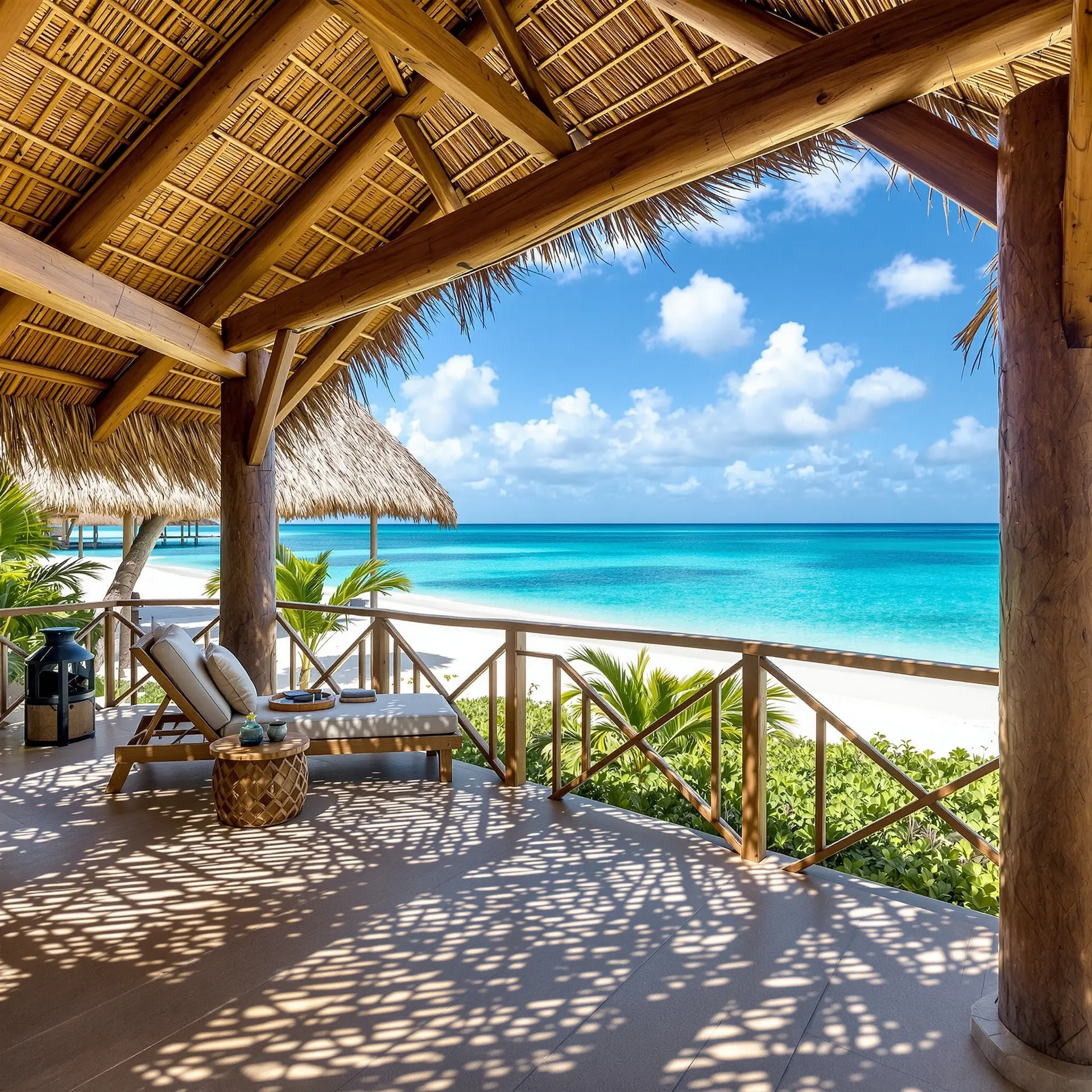
NSG Bamboo Center
To protect bamboo and reed structures by the sea you need salt-resistant fixings, details that keep moisture out and regular sun protection. The coastal climate tests natural materials from every side: salty air corrodes metal, high humidity raises the risk of mould and rot, and strong sun dries the fibres and fades their colour.
In short: On the coast, durability is won in the details and the upkeep rather than in the material alone. Stainless fixings, ventilation and water drainage under the roof, a suitable protective treatment and checks at the start and end of the season can extend the life of bamboo and reed structures noticeably, depending on conditions.
What does salty air do to bamboo and reed?
Salty air mainly affects metal parts and surfaces that hold moisture. Bamboo and reed fibre themselves often resist salt better than metal does; the real problems are corroding fasteners, fibre darkening around rust, and salt crystals that draw in moisture and keep surfaces damp for a long time.
- Fasteners: Screws, bolts, wire and binding hardware should be stainless steel or another coast-suitable material; ordinary steel rusts quickly.
- Salt build-up: Salt on the surface attracts moisture and slows drying. A periodic light rinse with fresh water reduces this.
- Wind: On the coast wind carries salt and also stresses the structure mechanically; loosening connections is a common issue.
How do humidity and rain affect the structure?
High humidity speeds up mould and rot, the biggest enemies of bamboo and reed; a structure that can dry stays healthy longer. On the coast the goal is not to keep reed from ever getting wet but to let it dry quickly afterwards.
- Pitch: A sufficient roof pitch sheds water quickly; flat or shallow roofs let water collect.
- Ventilation: Air movement under the roof carries moisture out. Closed, airless ceilings trap it.
- Waterproofing: For areas open to rain and in constant use, a suitable waterproofing layer can be planned beneath the natural covering. This is decided at the survey according to use.
- Ground contact: Bamboo poles in direct contact with the ground or standing water rot faster; foot connections should be raised.
- Sun and wind balance: Corners that never see sun and stay constantly damp are the best spots for mould.
How does strong sun wear down the material?
Strong ultraviolet light dries bamboo and reed fibre, fades its colour and makes it brittle over time. This fading is expected with natural materials; its speed depends on the sun-facing side, air humidity and the protective treatment used.
South and west faces, which get the most sun, wear faster. Protective treatments with UV and water-repellent properties suited to natural material are used; which product fits which surface depends on the material and intensity of use, and it should be tested on a small area first.
Which details make a coastal structure more durable?
The details that matter most are fastener choice, raising the supports off the ground and fixing the covering firmly against the wind. Done at installation, they cost far less than repairs later and keep the structure standing season after season.
- Fix timber and bamboo posts with a foot detail that does not draw moisture from the ground.
- Secure reed layers densely and evenly enough that wind cannot lift them; a loose surface falls apart quickly on the coast.
- Set the eave overhang for rain and sun; an overhang that is too long acts as a lever in wind.
- Seal the junction between roof and wall so water cannot enter.
- Design surfaces so that sand and leaves do not collect; debris holds moisture.
Each of these is settled on site at the survey, seeing wind and sun direction, which is why we prefer to see the space rather than give a standard remote answer.
What should the care calendar for a coastal structure look like?
The basic calendar is a check before the season, light cleaning during it and a thorough service at its end. In the sector an annual check is standard; in salty, windy areas you may need to check more often.
| Period | Task | Why |
|---|---|---|
| Before season | Check connections, rust and loose reed ends; protective treatment | Remove risks before heavy use |
| During season | Light fresh-water rinse, clear leaves and sand | Reduce salt and moisture build-up |
| After storms | Visual check, repair of windblown reed and loose fixings | Stop small damage from spreading |
| End of season | Thorough cleaning, repair, renewal if needed | Enter winter damp in good shape |
Avoid high-pressure water on reed surfaces; it can scatter fibres and open a path for water. For periodic checks and protective treatments see our Maintenance and Repair service.
What matters when building new on the coast?
The right decisions are made at the start: on the seafront the structure, fasteners, roof pitch and covering type should be planned together. For tropical-style pergolas, cabanas and beach huts, see Beach Hut Roof and Pergola Bamboo Roof.
NSG Bamboo Center, based in Aydın, surveys and installs along the Aegean and Mediterranean coasts, for example around Mugla and Izmir. During the survey we consider wind direction, distance from the sea, sun exposure and intended use together.
Frequently asked questions
Does bamboo withstand salty air?
Bamboo fibre is generally reasonably resistant to salt; the real risks are corroding fasteners and surfaces that stay damp. Stainless fixings and regular care are essential.
How long does a thatched roof last by the sea?
Lifespan varies with conditions, material, installation and upkeep, so a precise number of years would not be honest. A well-maintained roof lasts clearly longer than a neglected one.
How often should the protective treatment be renewed?
It depends on the product, sun exposure and use. The decision is made at the pre-season check by looking at the condition of the surface.
Is the survey for a coastal project free?
NSG Bamboo Center offers a free survey; the solution suited to coastal conditions is settled there.
For a protection plan for your seaside structure or a new project, fill in the free survey and quote form, and our team will get back to you.