NSG Bamboo Center
The best natural roof for glamping and bungalow resorts is a reed, thatch, straw mat or bamboo covering chosen to suit the resort's climate, building system and guest expectations. Natural roofs (thatched, reed, straw mat or bamboo) give bungalows a warm sense of nature and a strong visual identity, but waterproofing, fire safety and ventilation must be planned from the start.
In short: A natural roof is not just a decorative covering; it is a system considered together with the structure, the waterproofing layer and the details beneath it. For the resort owner the real question is not "which looks nicer?" but "which is safe, manageable to maintain and impressive for guests in our conditions?"
Why choose a natural roof for glamping and bungalows?
A natural roof answers the guest's wish to be "in nature" through the building itself. Glamping already combines nature with comfort, and the roofing material is the most visible part of that story.
- Atmosphere: The texture of reed and thatch makes a resort stand out in photos and at first glance.
- Thermal comfort: Thick natural coverings, properly detailed, can soften roof heating in summer; the effect depends on the structure and workmanship.
- Harmony: They combine easily with bamboo, wood and stone and blend into wooded or coastal settings.
- Repeatability: Using one roof language across several bungalows gives the resort a consistent identity.
What is the difference between thatch, reed, straw mat and bamboo roofs?
The easiest way to tell them apart is material and texture: thatch and reed come from plant stems, straw mat from woven panels, and bamboo from split or whole culms. Because these names are sometimes used interchangeably in the trade, explaining your need with visual examples and measurements makes things easier.
| Type | Look | Typical use |
|---|---|---|
| Thatch / reed roof | Dense, classic, regional texture | Bungalow, gazebo, restaurant |
| Hedgehog thatch | Tight, shaggy edge | Statement main buildings |
| Straw mat roof | Even, panel-like look | Shade, terrace, pergola |
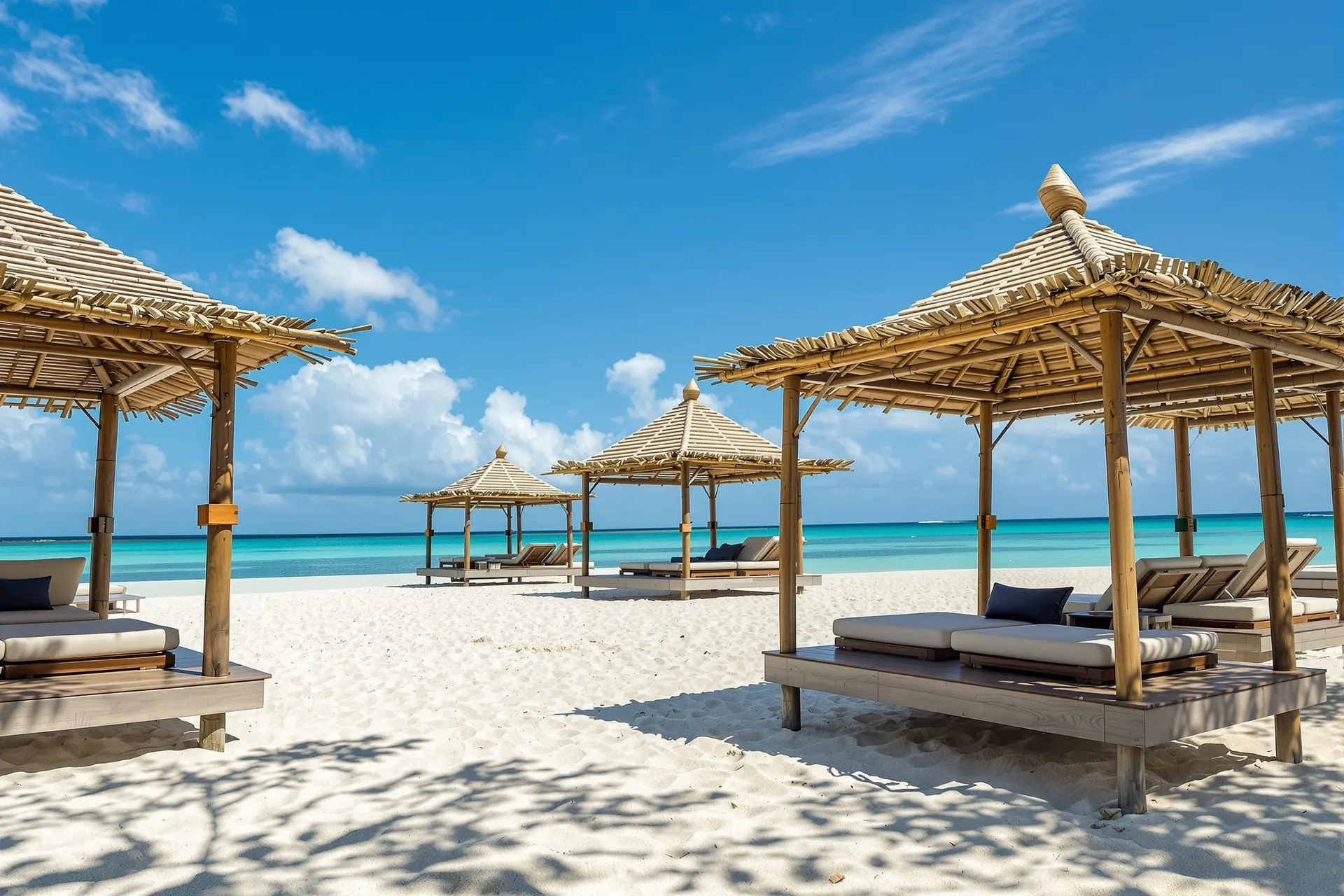
| Bamboo roof | Tropical, pole detail | Cabana, beach, poolside |
Among our product groups, the Premium Reed Mat Roof and the Premium Bamboo Roof System are options to review for such resorts. Requests without a ready product are handled as "custom design" during the survey.
How are waterproofing and fire safety handled on a natural roof?
A natural covering alone does not give full waterproofing; the real waterproofing comes from the structural layer beneath, while the covering is a visual and protective top layer. The roof substructure, slope and drainage must therefore be designed from the beginning.
- Slope and overhang: Enough slope helps water run off quickly, and a wide overhang protects the walls.
- Underlayer: A waterproof layer and a ventilated air gap are considered under the covering.
- Ventilation: In damp, closed-off zones the risk of mold and rot rises, so airflow beneath the roof matters.
- Fire: Natural materials are combustible. Keep chimneys, stoves, grills and heaters well away from the roof and learn the fire regulations that apply to your resort from the authorities. You can also ask about fire-retardant treatment options during the survey.
- Electrics: Cables should have a suitable protection rating and be installed by a licensed electrician.
Which criteria matter when choosing the right roof for a resort?
The right choice comes from weighing five criteria together: climate, intensity of use, budget management, maintenance capacity and resort identity. The list below works as a checklist for a decision meeting.
- Climate: Note wind, rain, humidity, salt and sun intensity. A coastal resort and an inland one do not need the same thing.
- Bungalow structure: The connection method differs for wood, steel or reinforced concrete; the existing structure is reviewed during the survey.
- Guest experience: Will the ceiling be visible from inside? If so, the interior surface needs design too.
- Maintenance calendar: Set check times before and after the season and plan the team and time for upkeep in advance.
- Expansion: If more bungalows will be added, think about how easily the same material can be supplied later.
In larger resorts, building one sample bungalow first and watching how it behaves for a season is often a wise approach rather than roofing everything at once.
How does the process run from survey to handover?
The process starts with a walk around the resort to clarify the need; then size, material and installation plan are decided together. NSG Bamboo Center, based in Aydın, provides survey and installation across Turkey; for bungalow and holiday-village regions such as Fethiye, Marmaris and Bodrum, see the Muğla service region page.
As a first step you can request a free survey under Consulting Services. The survey looks at building type, slope, existing roof, access and schedule, followed by a quote with a clear scope. To finish before the season starts, we suggest having the survey a few months ahead.
After installation, regular maintenance directly affects the look and life of a natural roof. A visual check at the start and end of the season, clearing leaves and dust and tightening loose connections is often enough; lifespan varies with climate and care.
Frequently asked questions
Which natural roof suits a bungalow best?
There is no single answer; reed, thatch, straw mat or bamboo is chosen according to climate, structure and the look you want. A recommendation for your site is given during the survey.
Does a natural roof let rain through?
The covering alone does not give full waterproofing; the structure and slope beneath it do that job. That is why the roof should be designed as a system.
Is a natural roof safe in terms of fire?
Natural materials are combustible; keeping heat sources away, following regulations and, if needed, asking about extra measures is essential. The rules that apply to your resort should be learned from the authorities.
How many years does a natural roof last?
It varies with climate, material, workmanship and care. Promising an exact number would be misleading, so it is discussed against your conditions during the survey.
To get a free survey and quote for your glamping or bungalow resort, fill in the quote form or book an appointment.