
NSG Bamboo Center
The need for natural materials in interior design keeps growing. In spaces full of glass, plaster and painted surfaces, bamboo brings warmth, texture and calm. Used as ceiling or wall cladding, bamboo creates a decorative focal point and changes how a room's sound and light are perceived. In this guide we cover the basic steps of choosing and applying bamboo cladding in interiors.
In short: Bamboo adds a natural linear texture, warmth and a light look to interiors. On a wall its texture is more noticeable, while on a ceiling it wraps the space like a warm shell; there are separate products for bars, dividers and decor. Humid areas, lighting and fire safety should be planned from the start.
What does bamboo bring to an interior?
The most distinctive feature of bamboo is its natural linear texture. This texture keeps a flat wall from looking dull and appears different under the light throughout the day. Its colour range, from light honey tones to dark brown, suits styles from a minimalist living room to a warm restaurant.
Bamboo also keeps the space visually light. It gives a slimmer, more linear look than wood cladding, so it does not overwhelm low-ceilinged or small rooms. On sound, depending on the surface structure it can soften echo to some extent; however, this should be seen as a decorative side effect rather than an acoustic solution.
Ceiling or wall?
The two applications create different effects.
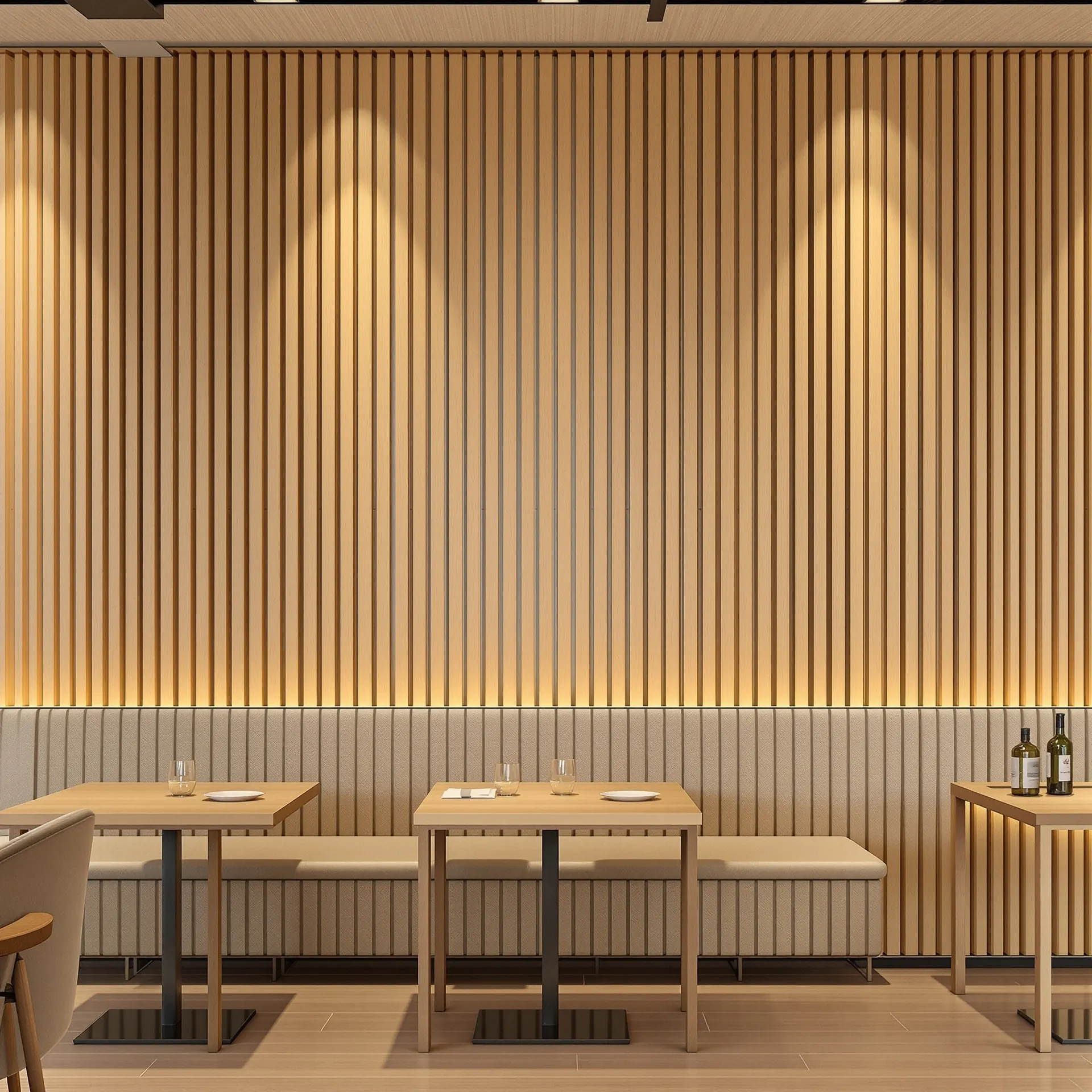
- Wall cladding: Being at eye level, its texture is noticed more. For accent points such as a TV wall, a bed head, a reception desk or behind a display, the modern bamboo wall cladding or the bamboo wall panel stands out.
- Ceiling cladding: It wraps the space from above and creates a warm shell effect. In settings such as restaurants, lobbies and spas, bamboo ceiling cladding and ceiling reed mat build atmosphere.
- Bar and counter: For the service area, bamboo bar cladding is a durable and visually strong option.
- Dividers and decor: The bamboo divider panel can be used to divide a space and decorative bamboo sticks for fine details.
Rather than covering the whole surface with bamboo, choosing only one wall or one part of the ceiling balances the budget and keeps the room in proportion. Too much cladding can weigh a space down.
Humidity, light and interior conditions
Indoors, bamboo is much more sheltered than outdoors, but some conditions still need attention. In humid environments such as bathrooms, kitchens and spas, contact with steam and ventilation must be considered. If humidity stays high, the surface can be affected over time; for such areas the suitable material and protective treatment should be discussed at the survey.
On window sides that get direct sun, colour may fade over time. Near heaters and fireplaces, distance and fire-safety treatments are important. In commercial spaces, compliance with fire regulations and the venue classification should be treated as part of the project design. Discussing these points at the survey prevents changes later.
Examples of use by space
At home, it is most often chosen for the TV wall, the bed head and the entrance hall. In restaurants, the ceiling and the bar surface set the atmosphere. In hotel lobbies, the wall behind reception, the lift lobby and corridor ceilings stand out; in shops, the area behind the display and the cash desk. In offices and meeting rooms, even a single accent wall softens a sterile environment.
Think of it together with lighting
The texture of bamboo cladding is seen best in light that strikes the surface from the side. Wall-washing lights or strip lighting hidden at the ceiling edge emphasise the linear texture. Very bright spotlights, on the other hand, can sometimes flatten the texture. The lighting plan should therefore be decided together with the cladding.
Harmony with other materials
Bamboo pairs well with concrete, white plaster, glass, black metal and natural stone. Adding fabric, kilims or plants softens the space even more. Rather than combining many different natural materials, leaving bamboo dominant and keeping the others complementary gives a more balanced result.
Common mistakes
The most common mistake is choosing the scale by taste alone rather than by surface size. Using very wide cladding in a small room makes it feel narrower. The second is not asking about suitability for humid environments at the survey. The third is thinking about electrical and lighting points afterwards. Solving these three from the start prevents most problems.
Application and care
The substrate matters as much as the look of the bamboo cladding. A flat, dry and sound surface keeps the panels sitting properly. The look of panel joints, corner and edge finishes, and lighting and electrical points should be planned before application. In ceiling applications especially, openings for spotlights, speakers, ventilation grilles and fire detectors are determined in advance. The process starts with measurement and technical analysis; for assembly, see the installation services page.
Daily care is simple: dusting with a soft, dry or slightly damp cloth is enough in most cases. Avoiding aggressive chemicals and very wet cleaning protects the surface. Lifespan varies with intensity of use, ambient conditions and care. For problems such as scratches, fading or lifting edges, maintenance and repair services can be used.
Frequently asked questions
Can bamboo cladding be used in humid places like bathrooms or kitchens?
In humid settings such as bathrooms, kitchens and spas, the material's contact with steam and the ventilation must be considered. If humidity stays high, the surface can be affected over time, so suitable material and protective treatment should be discussed at the survey.
Does bamboo cladding insulate sound?
Depending on the surface structure, it may soften echo somewhat. However, this should be seen as a decorative side effect, not as an acoustic solution. If you expect sound insulation, state that separately at the survey.
How is bamboo cladding cleaned?
Dusting with a soft, dry or slightly damp cloth is enough in most cases. Avoiding harsh chemicals and overly wet cleaning protects the surface. For problems such as scratches, fading or lifting edges, Maintenance and Repair can help.
Should bamboo cladding go on a wall or a ceiling?
A wall cladding sits at eye level so its texture is more noticeable, while a ceiling wraps the space from above. Choosing a single wall or ceiling section instead of covering every surface balances the budget and keeps the room in proportion.
Let us plan your project together
If you are considering bamboo ceiling or wall cladding for your living room, restaurant, hotel lobby or shop, one first needs to see the space and understand the need. In a free survey measurements are taken, the suitable panel and application method are determined and the cost is calculated. An idea with no counterpart in the products is assessed as custom design. You can find our consulting process on the consulting services page.
For a free survey and quotation, reach us through the quotation form. Let us choose the right bamboo cladding for your space together.