NSG Bamboo Center
Anyone looking for a natural roof for a garden pergola, beach club or restaurant terrace runs into the same questions. What is a hedgehog thatch roof? Are thatched and reed roofs the same material? How is a straw mat roof different? Because these names are often used interchangeably, the confusion is understandable. This article separates the terms in plain language and explains which roof suits which need.
In short: A hedgehog thatch roof is not a material but a laying style in which reed or thatching bundles are placed densely and thickly. Thatch and reed mostly describe the material, while hedgehog describes the method; a straw mat roof uses pre-woven panels. The right choice depends on how closed the roof must be and is settled at the survey.
What is a hedgehog thatch roof?
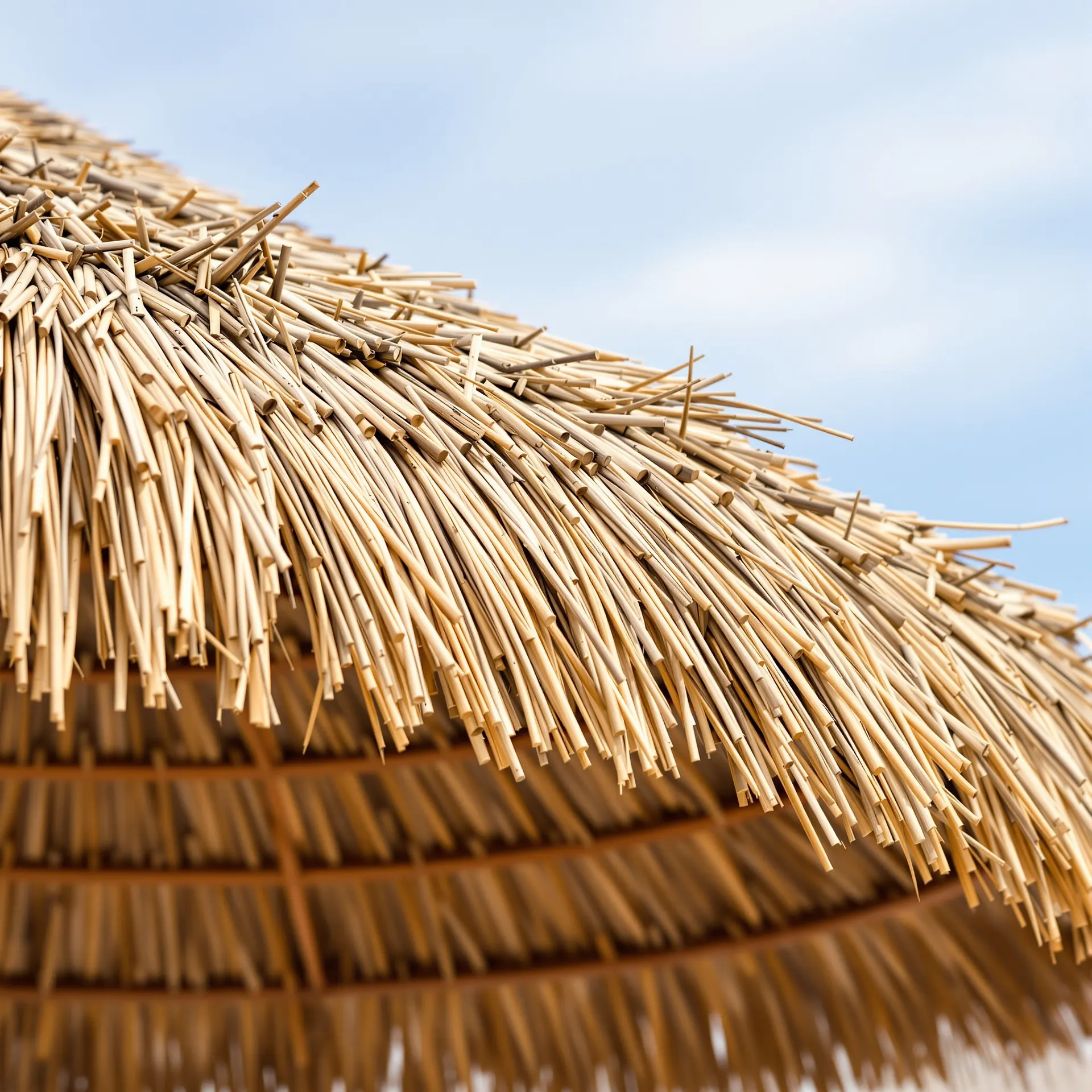
A hedgehog thatch roof is named after its look. Bundles of reed or thatching stalks are laid thickly and tightly, with the ends facing outward, so the surface resembles the dense spiny back of a hedgehog. That density is what helps shed rain downward and block most of the sun. Hedgehog thatch is not a material but a laying style: the same reed can be installed in different ways.
Visually, it has a solid, confident character. The edges form a clean line and the thickness of the layers is obvious even from a distance. That strong natural look is why it is often chosen for villa gardens, hotel entrances and restaurant pergolas.
Thatched roof and reed roof: the same or different?
In everyday speech, a thatched roof and a reed roof usually mean the same thing. Both are made from long, hollow, lightweight plant stalks that grow in wetlands. The differences tend to come from:
- Plant type and stalk thickness: thinner, even stalks give a finer look, thicker ones a more rustic surface.
- Bundle density: the same material laid loosely gives light shade, laid tightly gives a fully closed roof.
- Laying method: hedgehog, stepped or flat layering changes appearance and thickness.
So thatch and reed mostly describe the material, while hedgehog describes the method. A roof can be both reed and hedgehog-laid. When someone asks us for a "hedgehog roof," they are really asking for a dense, thick natural roof, and during the site survey we match that wish to the right product and installation.
Search phrases such as "reed hedgehog roof," "stepped reed roof" or "hedgehog roof covering" are really different descriptions of the same family. In stepped laying the layers show as visible steps and give the roof a livelier silhouette, while hedgehog laying looks more compact and unified. Which suits you depends on the slope, the rainfall and the look you want. Compared with a hard covering such as roof tiles, natural roofs create a much warmer atmosphere but need a different care routine, and knowing that from the start prevents surprises later.
How is a straw mat roof different?
A straw mat roof is built from pre-woven or pre-bound panels and rolls rather than bundles laid one by one. Reed or similar natural fibers are tied into a ready-made surface, which is then laid over the roof frame and fixed in place. Installation is usually faster and the surface more even. In return, thickness and density are generally more limited than a hand-laid hedgehog roof.
Mat roofs work well for shade structures, gazebos, pergola tops and poolside areas. Where more rain protection is expected, an underlayer or additional measures should be discussed, and that is best settled during the site survey.
Which one should you choose?
Ask yourself these questions:
- How closed should the roof be? For full protection from sun and rain, a dense, thick build (hedgehog style) fits better. If shade is enough, mat panels or a sparser layout may do.
- What look do you want? A full, strong natural texture, or a flatter, finer surface?
- How intensive is the use? In commercial spaces such as hotels, restaurants and beach clubs, durability and easy upkeep come first.
- What is the structure like? The slope, span and material of the frame directly affect the choice.
On the product side, take a look at Premium Reed Mat Roof and Rustic Reed Gazebo. If you are after a shade-focused solution, the Reed Mat Shade page may help. If you prefer bamboo, the bamboo roof category is a separate option.
An honest note on lifespan and upkeep: The durability of natural roofs varies with climate, slope, ventilation, material quality and maintenance. No one can honestly promise a fixed number of years; a roof that is installed correctly and inspected regularly is planned to serve for many years. You can read about our approach on the Maintenance and Repair page. Topics such as fire safety and waterproofing are assessed separately, according to how the structure will be used.
Frequently asked questions
Is a hedgehog thatch roof the same as a thatched roof?
Not exactly. A thatched roof describes the material, while hedgehog thatch describes the style in which that material is laid densely and thickly. One roof can be both thatch-built and hedgehog-laid, and in everyday speech the names are often used interchangeably.
Is there a difference between a thatched roof and a reed roof?
In everyday speech they usually mean the same thing; both are made from hollow, lightweight plant stalks that grow in wetlands. The difference mostly comes from the plant type, the stalk thickness and how tightly the bundles are laid.
How is a straw mat roof different from a hedgehog thatch roof?
A straw mat roof is not laid bundle by bundle; it is built from pre-woven or pre-bound panels and rolls. Installation is usually faster and the surface more even, but thickness and density are generally more limited than a hand-laid hedgehog roof.
Which roof protects best from rain and sun?
For full protection, a dense and thick build in the hedgehog style fits better. If shade alone is enough, mat panels or a sparser layout may do; for rain protection on a mat roof, an underlayer or additional measures should be discussed during the site survey.
Let a free site survey settle it
Hedgehog, stepped or mat? The best answer comes from seeing the space. Through our consulting service we run a free site survey, check the dimensions and frame, and explain the right solution. Just fill in the short form on the Get a Quote page, or pick a time on the appointment page.