
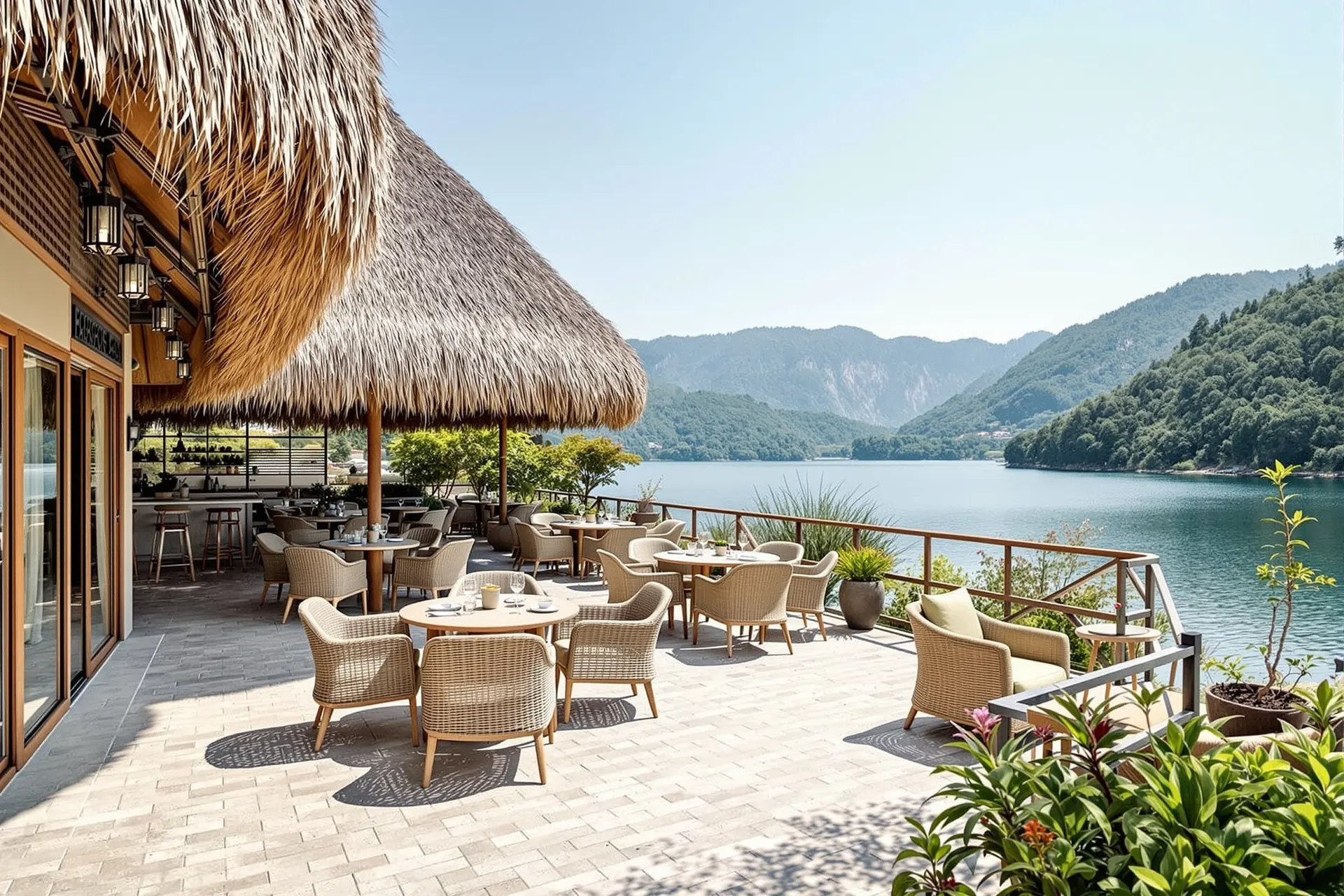
NSG Bamboo Center
For bungalows and lakeside venues in Sapanca, a thatched roof (reed roof) is a covering that completes forested, lake-view properties with its natural look, but whose slope and ventilation details must be handled carefully because of humidity, fog and snow load. Designed correctly, it is a safe choice for bungalows used in all four seasons.
In short: Sapanca's climate differs clearly from the Mediterranean coast: lake humidity, morning fog, cool summers and snowy winters. So the main topics for thatch in Sapanca are sufficient slope, a ventilated underside, a frame that carries snow load, and stove or fireplace safety. NSG Bamboo Center provides survey and installation in the region.
Why is thatch so common in Sapanca?
Thatch fits the natural feel of the lake, forest and bungalow trio, so it is common on bungalow houses, lakeside cafés and garden gazebos in Sapanca. Its biggest advantage is a calm look woven into nature for weekend guests from Istanbul and Kocaeli.
In and around Sapanca (toward the centre, Kırkpınar, Soğucak, Mahmudiye and Kurtköy) small-scale bungalow properties, lake-view restaurants and villas with wooded gardens are common. Thatch completes the exterior look of these buildings and gives coolness in summer. But this region is not on the Mediterranean coast; its winters and humidity differ, and the roof is designed accordingly.
- Bungalow roof: Main covering; slope and underside ventilation come first.
- Lakeside cafe and restaurant: Partly open terrace; wind and fog effects.
- Garden gazebo: Mostly summer use; winter precautions needed.
- Around pools and hot tubs: High humidity; ventilation is important.
For gazebo examples, see the Rustic Reed Gazebo and Gazebo Bamboo Roof pages.
How do humidity and fog affect a thatched roof?
Lake humidity and morning fog can keep thatch wet for a long time, which raises the risk of moss, mould and rot. The answer is enough slope, a ventilated underside and a position that reduces shade, so the roof can dry quickly.
In wooded areas, tree shade stops the sun from drying the surface. Moss is more likely on north faces and roofs ringed by dense trees, so trimming branches that harm the roof and regularly cleaning leaves and needles are recommended. With foggy mornings and high air humidity on the lakeshore, these measures go into the maintenance calendar.
| Condition | Risk | Measure |
|---|---|---|
| Lake humidity and fog | Staying wet long, moss | Enough slope, ventilated underside |
| Tree shade | Slow drying | Branch trimming, leaf cleaning |
| Snow load | Heavy load on the frame | Strong frame, steep slope |
| Frost and thaw | Surface cracking | Pre-winter check |
In summer, Sapanca is milder than the coastal regions; afternoon showers and cool evenings are also common. The roof is therefore thought of as one that must withstand changeable, damp weather as well as sun, and winter preparation is planned early in the summer.
What is done for snow load and slope?
In snowy regions a thatched roof is built with a slope steep enough for snow to slide off, and the supporting frame is sized for snow load. Because winter conditions around Sakarya and Bolu change from year to year, the roof is planned for a heavy winter rather than an average one.
On a flat or low-slope roof, snow and rain collect and thatch stays damp for a long time. On a steeper slope, water and snow run off faster and the surface dries quickly. The slope value is set by engineering calculation according to the thatch type and frame design; we do not give a fixed angle in this article. To stop snow from sliding suddenly onto the terrace, path or car below, snow guards and routing are also planned.
- Collect local knowledge of the property's historical snow depth and winter length.
- Size the frame for snow load; consider extra support on open terraces.
- Leave walkways along the roof edge sheltered from sliding snow.
- Check fixings and surface before winter.
- After very heavy snow, inspect the roof by eye for soundness.
How is stove and fireplace safety ensured in a bungalow?
Because many bungalows in Sapanca use a stove or fireplace, the distance between the flue outlet and the thatch surface and the insulation are the most important safety topics. Thatch is a natural, flammable material; around the flue outlet a suitable protective detail and heat-resistant insulation are needed.
These details differ with the bungalow's structure, so they are assessed one by one at the survey; fire-retardant treatment options and flue outlet solutions are discussed. It is also advised to keep flammable branch and leaf build-up on the lakeshore away from the roof and to design barbecue and stove places far enough from the roof.
- A heat-resistant passage detail around the flue outlet.
- A safe distance from the roof for stove and barbecue places.
- Electrical and lighting lines routed isolated from natural material.
- Regular clearing of dry leaf and branch build-up.
When should thatch work be done in Sapanca?
The best period for thatch is generally spring, after snow and heavy rain are over, and the dry summer and early autumn. Because weekend demand is high, work can be set on weekdays or low-occupancy periods; duration and delivery depend on the site, and project-specific information is given at the survey.
NSG Bamboo Center, with its Aydın-based team, provides survey and installation in and around Sapanca; see the Sakarya / Bolu service area page for details. Our Maintenance and Repair page also helps with post-winter checks and repair. For product and covering options, see the Premium Reed Mat Roof page.
Frequently asked questions
Does a thatched roof hold up in a snowy region?
With the right slope and a frame sized for snow load, a thatched roof can be used in snowy regions. Exact values are set at the survey according to the property's location and design.
Does lake humidity rot a thatched roof?
The risk rises on roofs that stay constantly wet and are not ventilated; enough slope, an open underside and regular cleaning reduce it. Service life varies with conditions and upkeep.
Is a thatched roof safe together with a stove in a bungalow?
Safety can be provided with a heat-resistant passage and enough distance around the flue outlet; details are assessed at the survey according to the property.
Is snow clearing from the roof needed in winter?
With enough slope, snow slides off by itself; after very heavy snow, checking the roof with a safe method and expert support, without stressing it, is recommended.
To get a free survey and price quote for your bungalow or lakeside venue in Sapanca, fill in the quote form or book an appointment. Our team assesses the roof, slope and flue outlet on site.