
NSG Bamboo Center
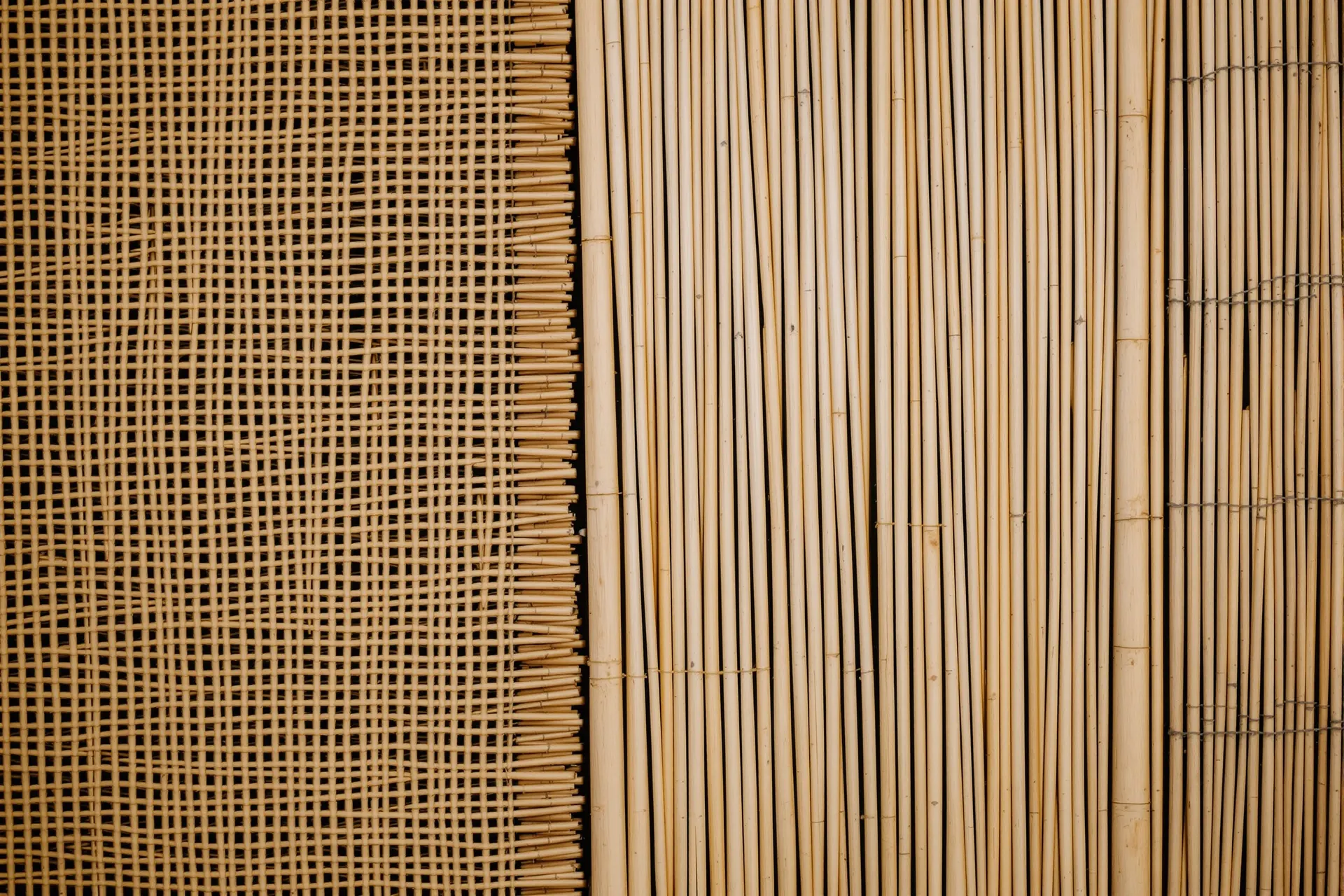
Reed mat ceiling cladding is the application of woven reed and cane panels or rolls to a ceiling surface, giving a space a natural, warm and textured upper plane. It is used in restaurants, cafés, hotel lobbies, spas and beneath pergolas as a solution that is both decorative and a source of shade or visual cover.
In short: Installation consists of checking the ceiling substructure, preparing the material to size, fixing it to a supporting frame and finishing the edge details. Indoors, fire safety, ventilation and lighting must be thought through from the start.
What is reed mat ceiling cladding?
Reed mat (also called reed or cane mat) ceiling cladding is a textured surface made by tightly weaving natural reed stems. On a ceiling it hides the structure above, gives the space a rustic or tropical feel and softens the light.
The main characteristics of the material are:
- Natural texture: Each panel has small tone and texture differences, which add life to a space.
- Lightness: It is usually light and puts little load on the substructure, although the adequacy of the supporting system is still checked during the survey.
- Flexibility: It can be adapted to flat, sloped or gently curved ceilings.
- Visual cover: It can hide exposed services, cables and beams.
Among our products, Ceiling Reed Mat can be reviewed for this purpose; for those who prefer a bamboo look, Bamboo Ceiling Cladding is an alternative.
Where is reed mat ceiling cladding used?
The most common uses are commercial and residential spaces that want a natural atmosphere: restaurants, cafés, hotels, spa and wellness areas, beach club interiors and, in homes, terrace, veranda or gazebo ceilings.
- Restaurant and café: Covering the ceiling softens sound reflection slightly and gives tables a friendly atmosphere.
- Hotel and spa: It creates a calm, natural feel in lobbies, waiting and treatment rooms.
- Terrace, veranda and under a pergola: It softens sun from above and tidies the look of the roof underside.
- Home: It works as a feature ceiling in a living room, kitchen or seating corner.
How is reed mat ceiling cladding installed?
It is installed by fixing mat prepared to size onto a sound substructure. The right sequence directly affects both appearance and durability.
- Survey and measurement: Ceiling height, surface, existing services and lighting points are reviewed. Needs differ for indoor and outdoor use.
- Substructure: A timber or metal batten system is built; the surface must be flat and sound. On damp surfaces, the source of moisture must be dealt with first.
- Material preparation: The mat is cut to size and, if needed, left in the space for a while to acclimatize.
- Fixing: Panels or rolls are fixed evenly and taut to the supporting frame with suitable fasteners.
- Edge and service details: The joint with the wall, spotlights and ventilation openings are finished neatly.
- Final check: The surface, fixing points and overall look are inspected.
The process is carried out under Installation Services; to decide the right route for your space, you can request a free survey through Consulting Services.
How should fire safety and care be considered indoors?
Reed and cane are natural, combustible materials, so fire safety, distance from heat sources and the relevant regulations must always be checked before an indoor installation. The exact requirements are set by the relevant municipality and fire department.
- Heat and light sources: Keep spotlights, projectors and heaters well away from the material; heat-emitting fixtures should not sit right next to the mat.
- Kitchen and cooking areas: Natural ceiling cladding may not be recommended where there is open flame and grease vapor.
- Electrics: Wiring should have suitable protection and be done by qualified people.
- Dust and cleaning: Dust can collect on a textured surface; clean periodically with a soft brush or vacuum head.
- Damp: In constantly steamy or wet environments natural material can deteriorate; humidity is assessed during the survey.
A maintained ceiling keeps its look and strength longer; lifespan varies with conditions, material and care. Instead of promising a number of years, the healthiest route is to draw up a realistic expectation for your conditions during the survey.
How do you choose the right material and pattern?
Choice depends on the purpose of the space, ceiling height and lighting. On low ceilings, a light tone and fine texture make the space feel airy, while on high ceilings a darker, more pronounced texture adds warmth and scale.
NSG Bamboo Center, based in Aydın, provides survey and installation across Turkey. Sharing the look you like as a photo or sample piece makes the survey more efficient. Special requests without a ready product are handled as "custom design" during the survey. Trying a feature area first and extending later is also an approach that balances budget and risk.
Frequently asked questions
Can reed mat ceilings be used indoors?
Yes, but fire safety, ventilation and humidity must be checked. Around kitchens and cooking lines, another material may be more suitable.
How do you clean a reed mat ceiling?
Removing dust with a soft brush or vacuum head is often enough. Wet and harsh cleaners are avoided.
How many years does mat ceiling cladding last?
It varies with conditions, material quality, workmanship and care. Promising an exact period would not be right; it is discussed against your conditions during the survey.
How is the price determined?
Price depends on surface area, material type, substructure needs and installation conditions. The space must be seen for a clear figure; you can request a free survey and quote.
To get a free survey and quote for your ceiling, fill in the quote form or book an appointment.